Attention Journal
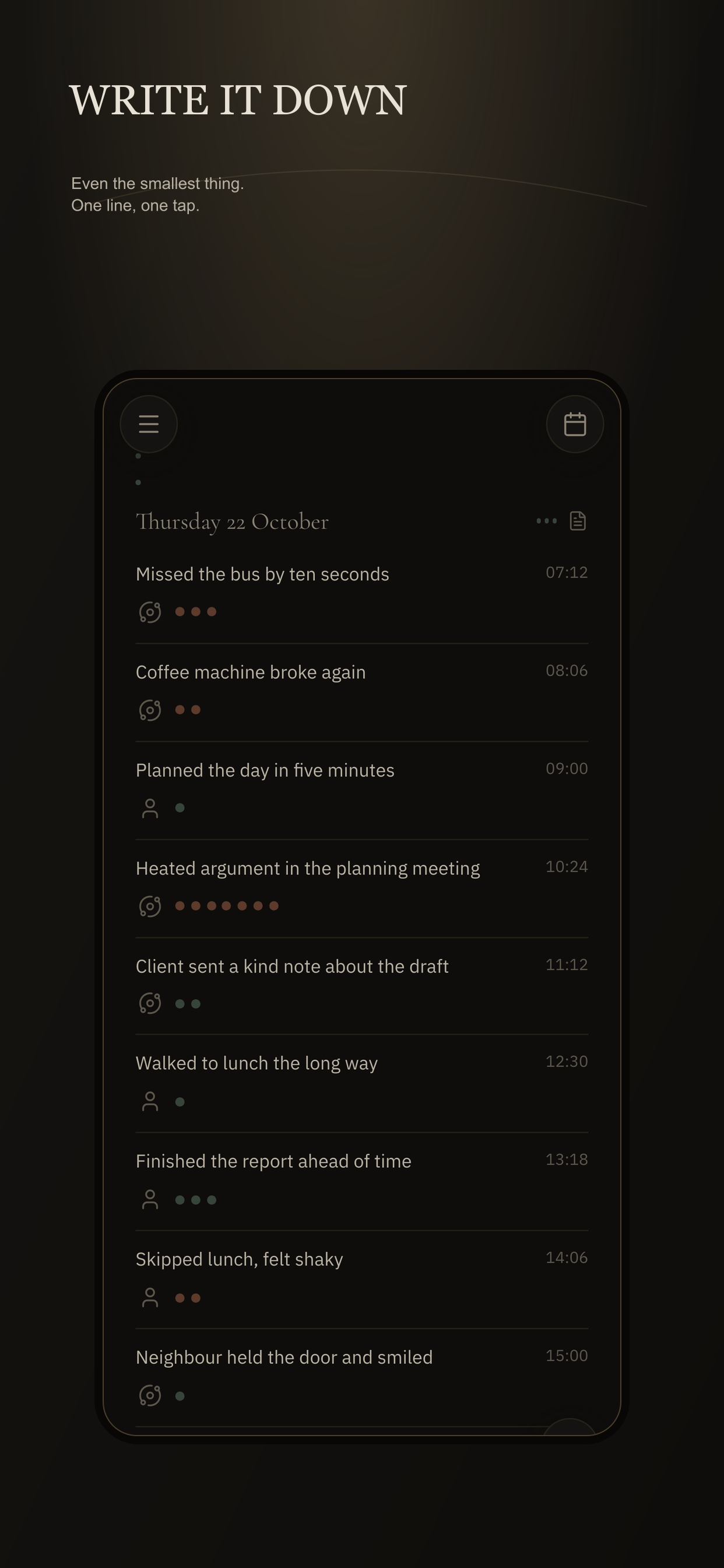
Not a diary — a place to jot down what caught your attention, even the smallest things,
and to see how the day really went.
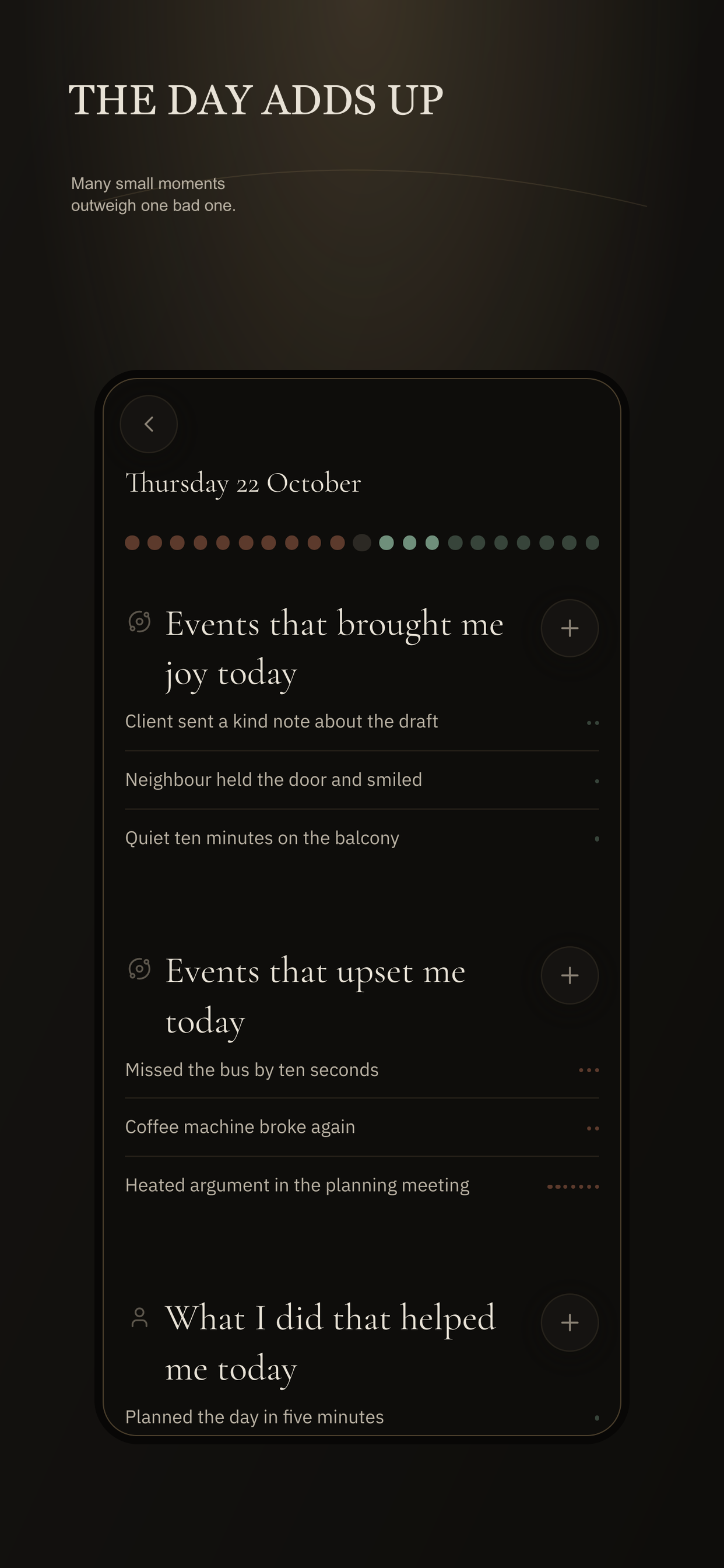
A single unpleasant moment can overshadow a whole day. Written down, the day adds up differently.
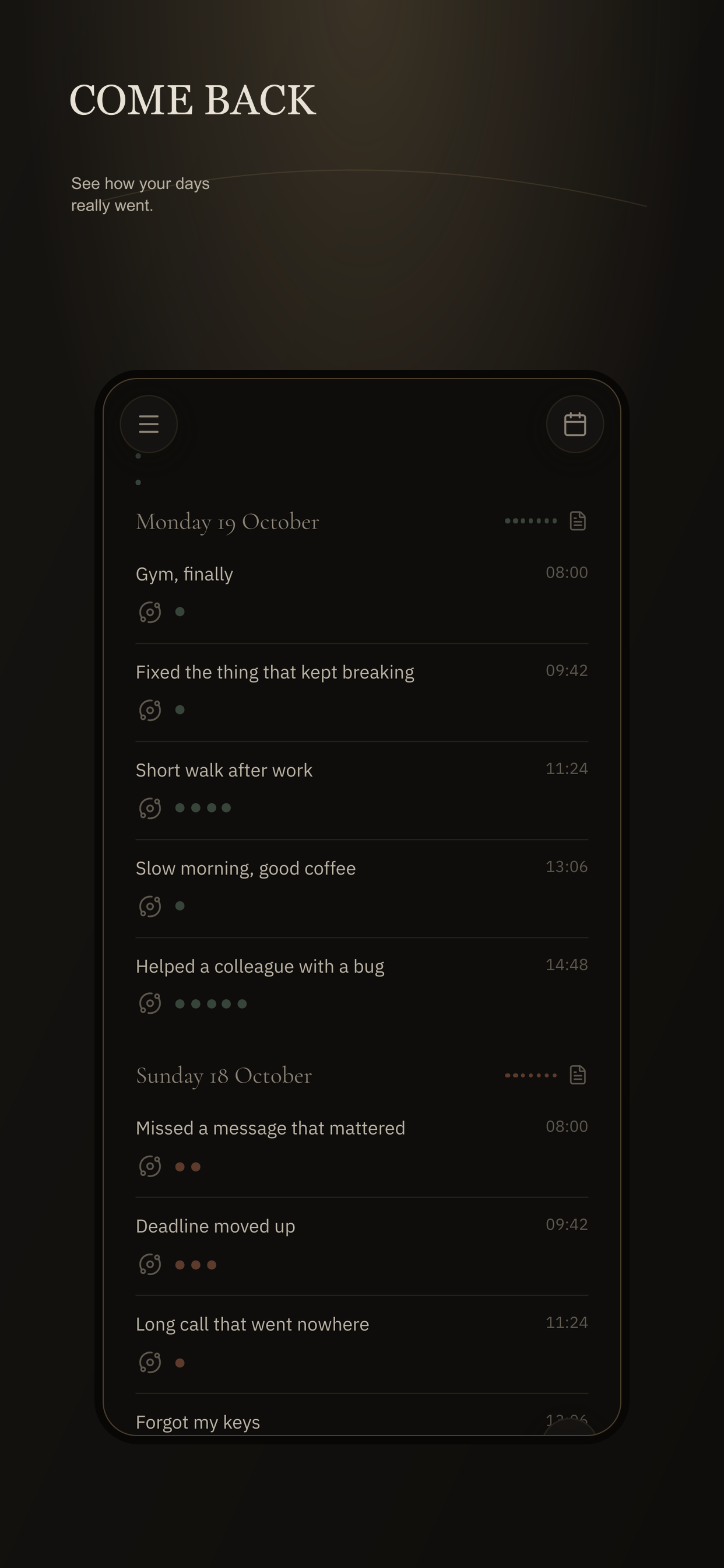
Attention Journal is a quiet, simple tool for noticing what catches your attention, and the story you tell yourself about it.
Two ways to use it
Daily. Jot down events and things you did, one line each, with a quick score for how it landed. That is already enough. At the end of the day the report adds everything up, and big swings count for less than they feel: one bad moment does not outweigh many small good ones. A day that felt rough can turn out fine.
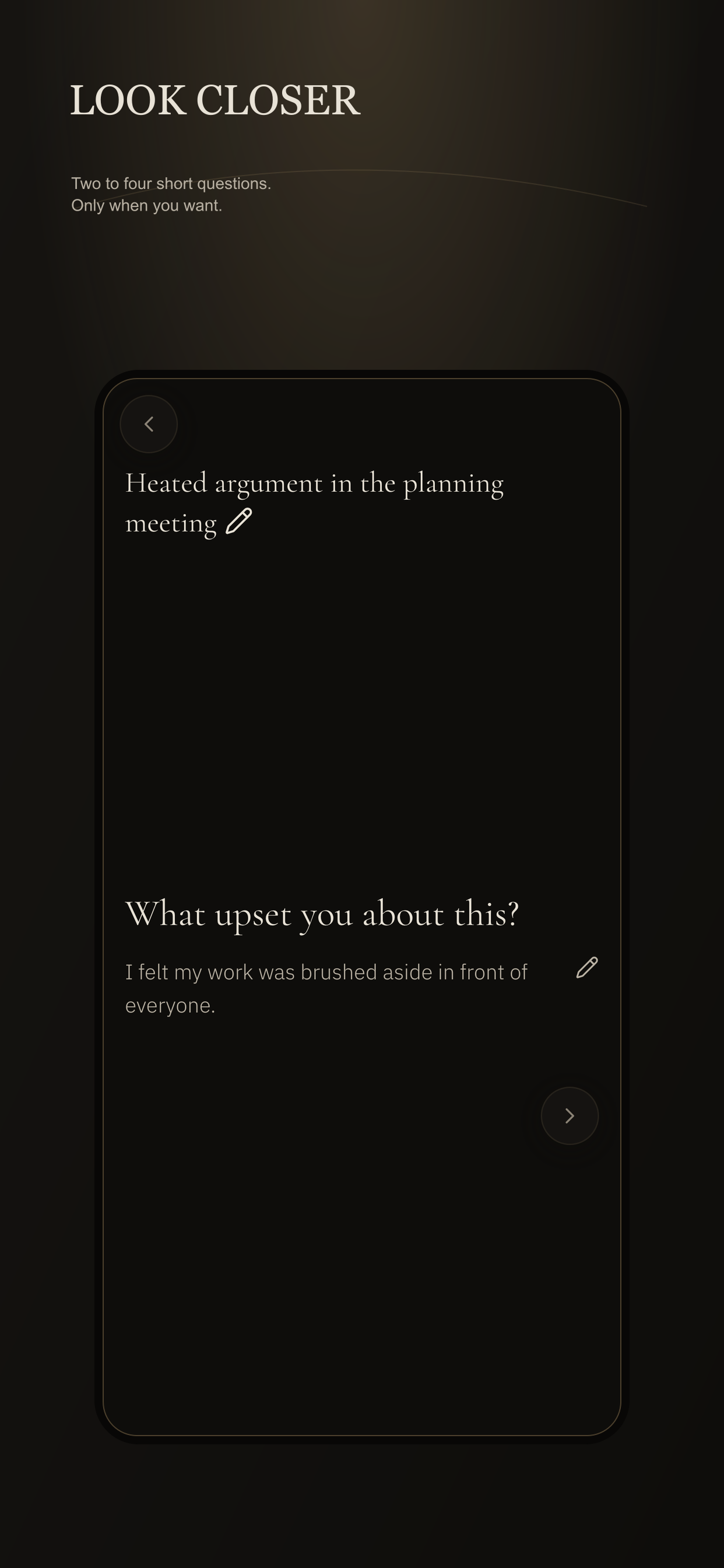
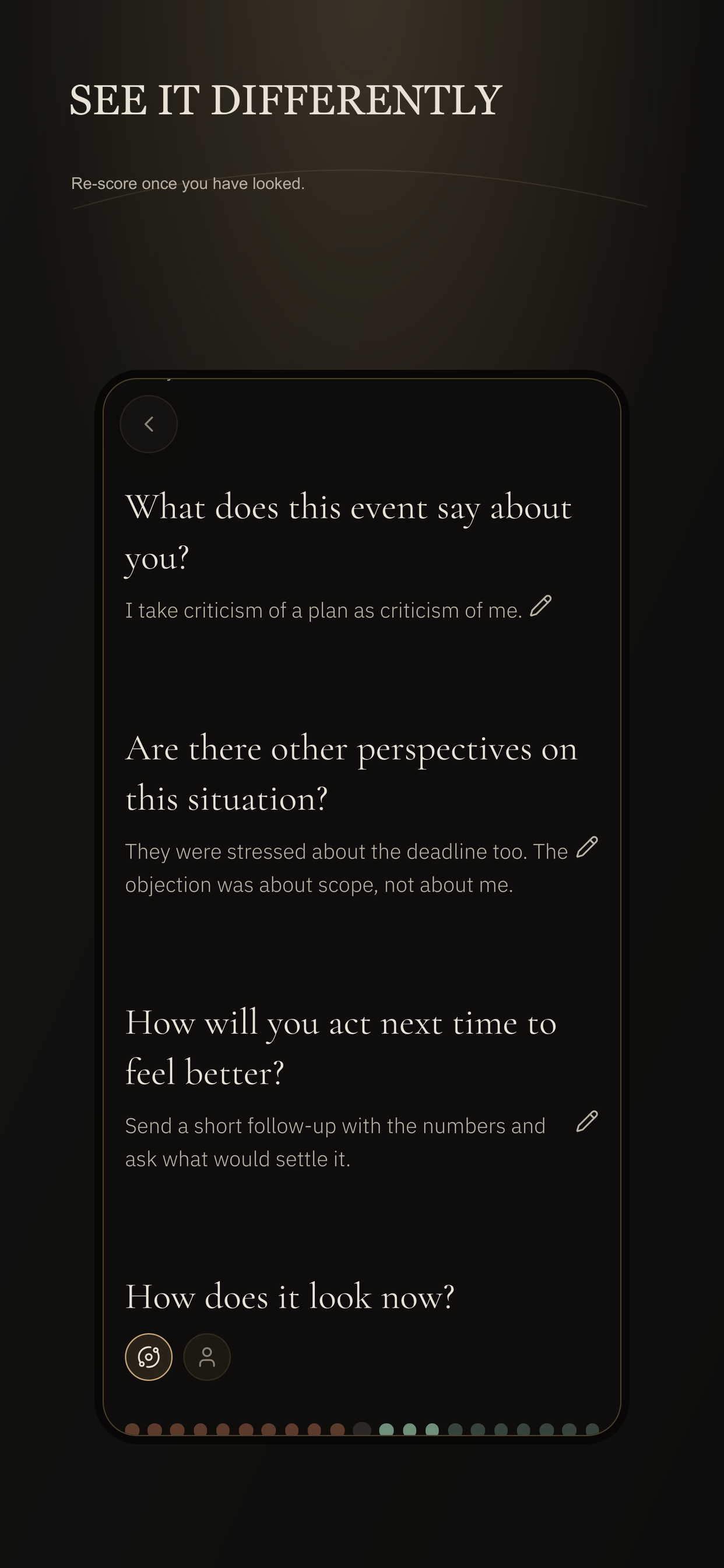
Reflection. Switch on reflection mode to look closer at an entry: up to four short questions (what upset or pleased you, what it says about you, other ways to see it, what you will do next time), then score it again. Sometimes the second score is very different from the first.
A look from the side
Any entry can be sent, as it is, to the I Ching: its web app opens with your entry as the question and casts a hexagram at once. It is not an answer, only another angle on the same moment, and nothing changes in your journal.
Why so short
The approach is inspired by the thought records used in cognitive behavioural therapy, heavily simplified. A full worksheet can ask ten questions for a single emotion. This asks a few, on purpose: it is built for casual daily use, so that capturing even the smallest thing stays easy.
What it is not
It is not therapy, medical advice or a complete method, and it does not diagnose or treat anything. It is a personal reflection tool. If you are struggling, please talk to a professional.
Your data
Your archive stays on your device by default, in one calm stream. No account is needed. Sync across your devices is optional, and when you turn it on the whole history comes along.
What is in it
- One-tap capture of any event or act
- A day report that adds everything up
- Optional reflection: a few short questions and a second score
- Send any entry to the I Ching for another point of view
- Archive and calendar
- On iOS and Android, the system share sheet sends messages, notes and quotes straight in
- English and Ukrainian
- No account required, your archive stays on your device
- Optional sync across your devices, with the full history kept
- No social features, no feeds, no notifications
Questions
Is this CBT? It borrows the shape of a thought record and cuts it down. It is not a substitute for CBT.
Is it free? Yes, and it works in the browser: open the web app below.
Capture it.
Return to it.
See it clearly.